
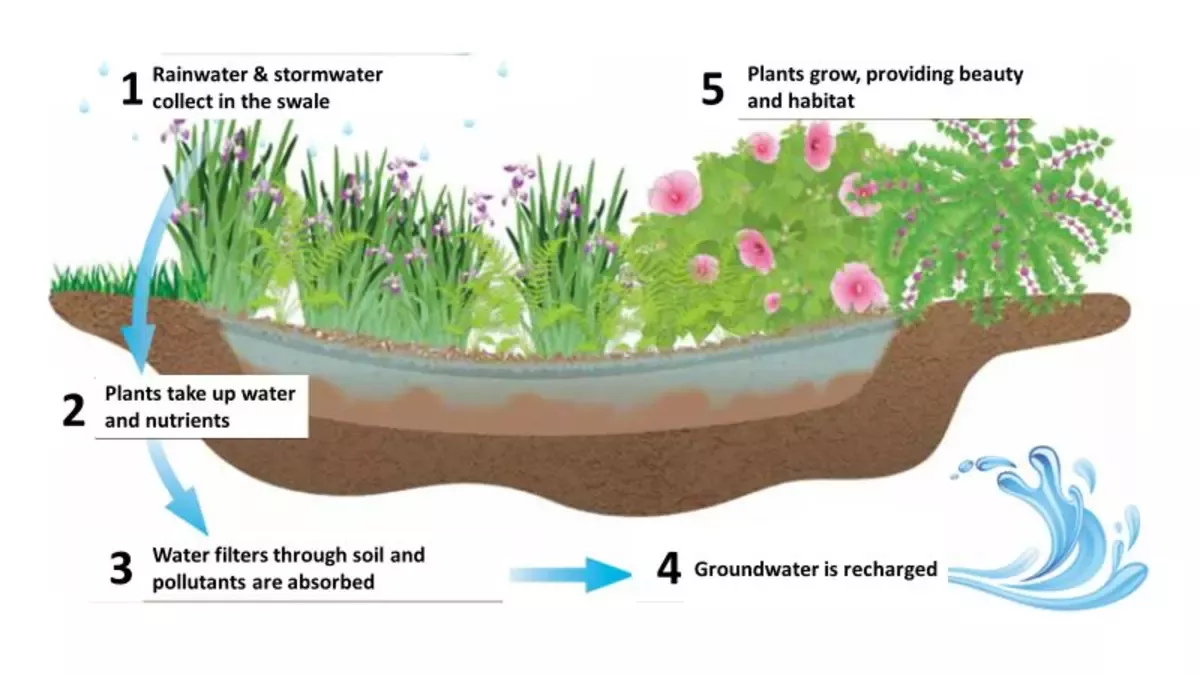
An eco-garden is an attractive environmentally friendly way to improve water quality and biodiversity. An eco-garden is something that anyone can create in their own yard. It can beautify your yard but also help the city’s infrastructure and natural biodiversity. An example of an eco-garden can be found at the NE corner of D Street and A1A Beach Blvd. You may see that part of it is a shallow depression that temporarily retains stormwater during heavy rains, which will help reduce flooding on roads and other parts of the city. The water will then percolate through the soil and plant roots, which will filter out fertilizers, oil, and pesticides that would otherwise end up going thru a storm pipe and polluting the ocean and intracoastal waterways killing seagrass and causing toxic algae blooms. An eco-garden results in cleaner water for the fish, manatees, and you!
Want to Help?
Everyone with a yard can help pitch in by adding an eco-garden to their own yard; big or small, any size will help. Non-native grasses that make up most lawns provide very little habitat for native Florida organisms and have shallow roots that absorb little water during heavy rains. Native wildflowers, shrubs, and trees have deeper roots and absorb much more water and provide habitat and food for native Florida animals, like birds and butterflies. They also absorb more CO2. Some easy native plants to start with are Sunshine Mimosa, Dune Sunflower, Scarlet Sage, Coreopsis, Black-eyed Susans, Goldenrod, Partridge Pea, Muhly Grass, Hummingbird Bush, and Southern Red Cedar.
Learn more at:
Home Grown National Park
Florida Native Plant Society
Florida Wildlife Federation
Xerces Society for Invertebrate Conservation
Plant Real Florida
Florida Wildflower Foundation